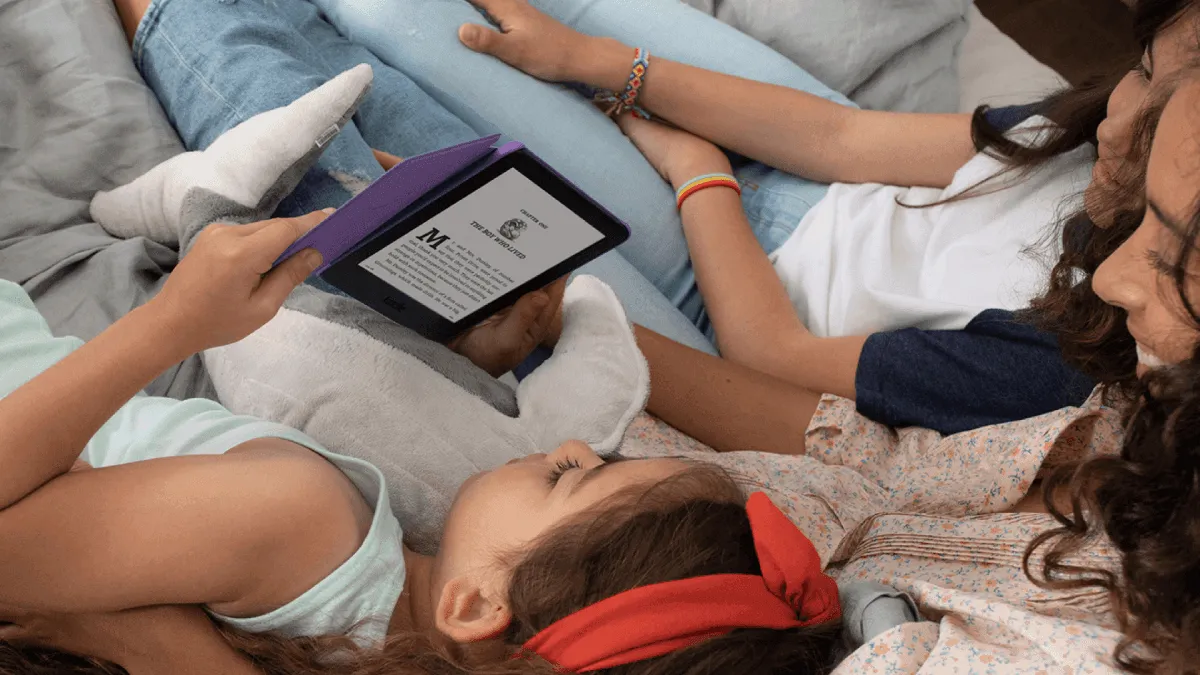
Reading in bed is where most e-reader usage actually happens. Yet almost no buying guide focuses on what matters at midnight: can you hold it with one hand while lying on your side? Does the light get dim enough to not wake your partner? Will it hurt if you drop it on your face?
What actually matters for bedtime reading
Weight (the #1 spec)
The difference between a 158g device and a 205g device doesn’t sound like much. After 40 minutes of one-handed reading while lying on your side, it’s everything. Lighter devices cause less hand fatigue and — importantly — hurt less when they inevitably fall on your face.
- Kobo Clara BW: 174g — lightest premium option
- Kindle Basic (2024): 158g — absolute lightest
- Kindle Paperwhite: 205g — noticeably heavier
- Boox Palma: 170g — phone-shaped, easy one-hand grip
- Kobo Libra Colour: 205g — heavier but the side buttons help
The Kindle Basic wins on pure weight. But weight isn’t the only factor.
Warm light quality (the #2 spec)
Blue light suppresses melatonin. Warm light doesn’t. Every modern e-reader has adjustable warm light, but the quality varies:
- Kobo — Best warm light implementation. Can get genuinely orange, like candlelight. Smooth gradient from cool to warm.
- Kindle — Good warm light but capped at a less-warm maximum than Kobo. Still effective for sleep hygiene.
- Boox — Warm light quality varies by model. The Palma is excellent; older Note models are uneven.
- PocketBook — Good warm light, comparable to Kindle.
The dimmest setting matters too. Some devices don’t dim enough for a fully dark room. Kobo and Kindle both get very dim. Boox models can be hit or miss.
Form factor (the #3 spec)
One-handed reading in bed means you’re either holding the device from the bottom (portrait mode for most books) or gripping the side. Side buttons (Kobo Libra Colour, PocketBook Era) make page-turning effortless when you’re gripping from the side. Touchscreen-only devices (most Kindles) require a thumb swipe that’s slightly more awkward in one-handed mode.
The Boox Palma’s phone-like form factor is surprisingly great for bed reading — it feels like holding an iPhone, which your hand is already trained to do. The narrow width means your thumb reaches the screen easily, even when lying on your side.
Drop protection
Let’s be honest: you’re going to drop it. Consider:
- A lightweight silicone case adds grip without much weight
- A pop socket or love handle stuck to the back transforms one-handed ergonomics
- The $160 Kindle Basic hurts less to drop than a $400 Boox
The picks
Best overall: Kobo Clara BW ($140). Light enough for one-handed use. The best warm light in the business. Gets dim enough for a pitch-black room. No side buttons, but the weight makes up for it.
Best for side-sleepers: Boox Palma ($280). Phone-shaped, minimal bezel, easy to hold in landscape or portrait while lying on your side. The warm light is good, not great. The tradeoff: it’s expensive for a dedicated bedside device.
Best budget: Kindle Basic 2024 ($100). The lightest device on the market. Warm light and dark mode. No waterproofing, but you’re in bed, not the bathtub.
Best with buttons: Kobo Libra Colour ($220). Side buttons make page-turning effortless when holding from the side. Color screen is a bonus for comics in bed. The weight is the tradeoff.
If you drop things: Kindle Paperwhite ($150) with a silicone case. The most durable mainstream e-reader. Heavier than the competition but survives falls that would crack a Boox screen.
Dark mode and bedtime
Dark mode (white text on black background) is essential for reading next to a sleeping partner. Every modern Kindle and Kobo has it. Kindle calls it “Dark Mode” in Settings. Kobo hides it under Settings → Reading Settings → Invert Screen (or enable Developer Options for the toggle).
In dark mode, the difference between devices gets smaller — they all look like white text on a dark gray background. The key differentiator becomes the minimum brightness: you want the dimmest possible setting for dark-adapted eyes. Kindle and Kobo both excel here.
Bedtime accessories worth owning
A gooseneck tablet mount that clamps to your headboard lets you read flat on your back with zero hand involvement. Pair it with a Bluetooth page turner remote (about $15) and you can turn pages without moving your hands from under the blanket.
What to read before bed
Fiction works better than nonfiction because it is easier to put down. Rereading a familiar book is calming — I’ve read The Hobbit before bed half a dozen times. Short stories give you natural stopping points, unlike page-turners that keep you up until 2 AM. I’ve learned the hard way that thrillers and work-related books are terrible bedtime choices.
Set a device’s auto-off timer if it has one (Kindle and Kobo both offer this). It is a gentle nudge that says “you should probably sleep now” without the guilt of checking your clock. Max out the warm light about 30 minutes before you plan to sleep, drop the brightness to minimum, and the combination genuinely helps you wind down.